NASA Technological Breakthrough: Key Innovations Required for a Permanent Lunar Base
NASA and global scientists are developing seven critical technologies to enable long-term human presence on the Moon, including nuclear reactors and advanced life support systems.
 🎭Culture & Sport
Photo: RBC-Ukraine
Key points
- NASA is developing seven core technologies for a permanent lunar base
- A compact nuclear reactor launch is planned for 2030
- Using local lunar resources will reduce reliance on Earth supplies
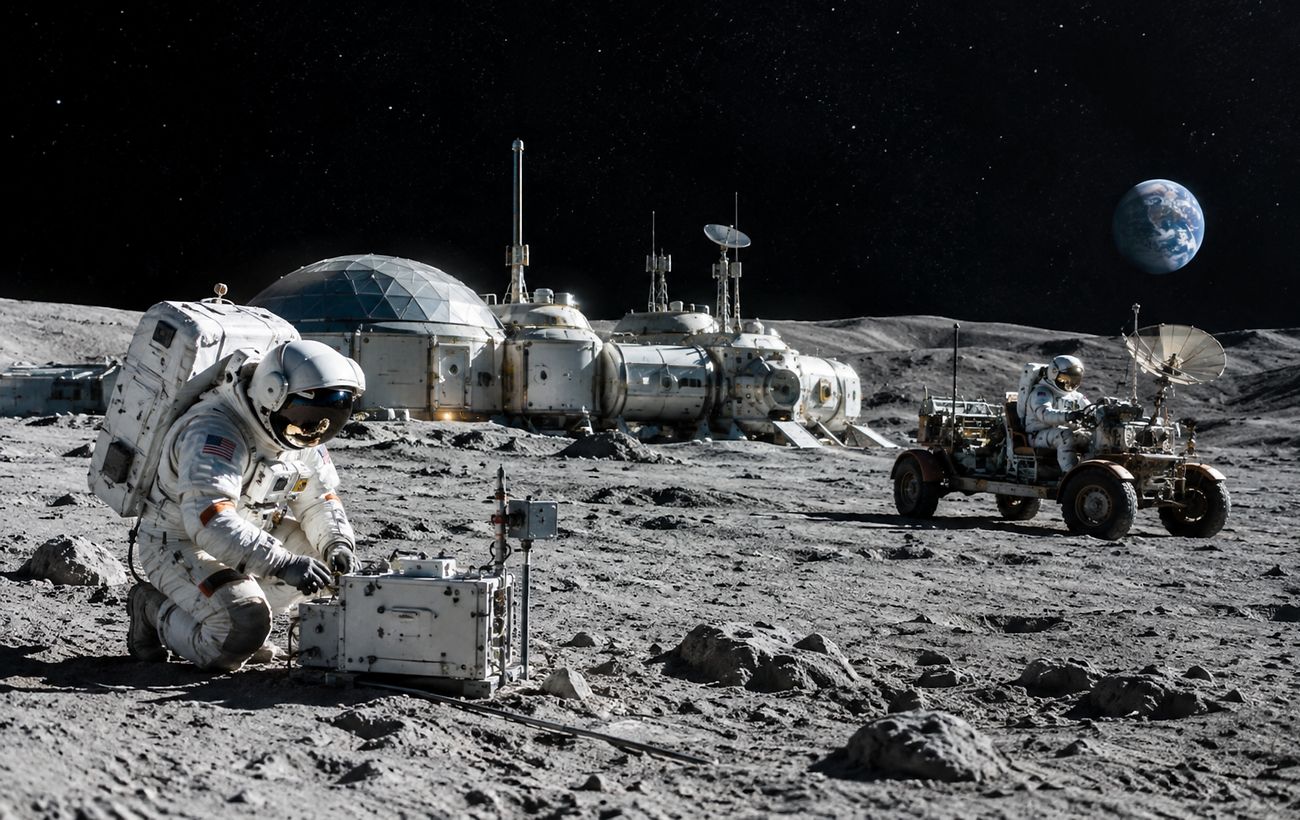
Space exploration is entering a new era as humanity moves closer to establishing the first permanent settlements beyond Earth. NASA, alongside international researchers, is focusing on solving fundamental engineering challenges related to extended human presence on the lunar surface. Transporting all required supplies from our home planet is economically unfeasible, prompting scientists to develop innovative methods for autonomous life support.
Energy and Autonomous Resource Utilization
One of the most critical challenges remains securing a stable power source. Traditional solar panels prove insufficient due to the nature of lunar days, which last approximately 14 Earth days, as well as permanently shadowed regions near the poles. To address this, engineers are developing compact nuclear reactors capable of delivering uninterrupted power regardless of lighting conditions. The first such reactor, Lunar Reactor-1, is scheduled for delivery to the Moon early next decade.
Furthermore, the strategy relies heavily on In-Situ Resource Utilization (ISRU). Water ice deposits preserved in polar craters could supply drinking water and serve as raw material for rocket propellant by separating hydrogen and oxygen. In parallel, engineers are improving closed-loop life support systems similar to those on the International Space Station, while also creating advanced methods to protect equipment from abrasive lunar dust and cosmic radiation using thick layers of regolith.
Source RBC-Ukraine — rbc.ua/ukr/news/vid-dernogo-reaktora-5g-shcho-potribno-nasa-1794836… ↗
Read next
 🩺Health
Home foil test: how Kovel residents can find the cause of damp walls
With the arrival of cold weather, residents often face damp spots and mold on walls. A simple foil experiment can help distinguish internal structural moisture from regul…
 👥Society
Poland prepares diplomatic response to airspace violation by Russian objects
Polish Foreign Minister Radosław Sikorski announced an official protest regarding the incident that occurred on November 20.
 🛡️Security
New American drone Bombard: a technological solution for modern conflicts
Vector has unveiled the Bombard strike drone, capable of flying over 1,000 km. The design incorporates lessons learned from the war in Ukraine.
 💡Tech
China develops space fleet project for rapid response
Researchers from the PRC have unveiled a concept for an orbital fleet of 40 spaceplanes capable of reaching any point on the planet in minutes.
 🩺Health
Shifting German Sentiments: How Public Opinion Influences the Future of Aid to Ukraine
A new sociological poll in Germany shows a growing public skepticism regarding the scale of assistance to Kyiv, even as official Berlin continues to state its commitment.
 ⚽Sport
Kyiv-Basket defeats Zaporizhzhia 86-71 in Superleague revenge match
Kyiv-Basket secured a confident home victory over Zaporizhzhia in the regular Superleague championship, avenging their earlier defeat.