Archaeologists discover seeds of rare flower inside a 4,000-year-old vessel
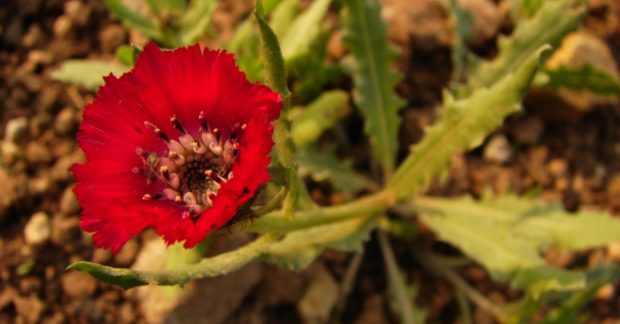
During excavations in Turkey, researchers discovered a ceramic vessel dating back approximately 4,000 years containing the seeds of a unique plant currently facing the threat of extinction.
 👥Society
Photo: UNIAN
Key points
- A 4,000-year-old Hittite jar containing seeds was discovered
- The plant is known as Centaurea tchihatcheffii or the 'love flower'
- The species is endemic to the Gölbaşı region of Turkey and faces critical endangerment
- Authorities and conservationists are implementing special protection and restoration programs
Archaeological research frequently yields unexpected biological discoveries that offer fresh insights into the historical relationship between humanity and nature. While excavating at the Kültepe mound in the Gölbaşı district near Ankara, specialists uncovered an almost intact ceramic jar dating back roughly 4,000 years, which preserved the seeds of a rare plant inside. Project leader Derya Yılmaz Tekin noted that the artifact was found in a central room of a large ancient structure.
A botanical find from the Hittite era
The coarse pottery vessel with small shoulder lugs belonged to the Hittite period. However, its contents proved to be of paramount scientific value. Botanists identified the seeds as belonging to Centaurea tchihatcheffii, known locally as the 'love flower.' This unique annual plant grows wild exclusively in the Gölbaşı region and nowhere else on Earth.
Today, this species balances on the brink of extinction due to human factors and changing agricultural practices. Research indicates that the survival of the flower is directly linked to proper and timely farming methods. Specifically, scientific modeling demonstrates that ploughing the fields after the seeds have matured helps increase the plant's population in the following season.
Preserving natural heritage
Local authorities and environmentalists have already taken action to rescue the rare species. Special conservation zones were established around Lake Mogan, where areas featuring the plant have been fenced off, land management has been adjusted, and collected seeds are sown in suitable locations. Such initiatives are vital for preserving biodiversity and highlight how deeply rooted the connection is between human activity and the survival of vulnerable ecosystems.
Source UNIAN — unian.ua/curiosities/ridkisna-kvitka-turechchini-yaka-bilshe-nide-n… ↗
Read next
 🩺Health
Efficient Home Heating: How to Choose a Heater and Optimize Electricity Consumption
An overview of household heating appliances: convectors, oil radiators, and fan heaters. A comparison of their performance, safety, and energy efficiency.
 🛡️Security
Rescue operation in Dymer: death toll from Russian strike rises
A search and rescue operation continues in the town of Dymer, Kyiv region, following a Russian strike. Rescuers have recovered the body of the ninth victim and saved an e…
 🛡️Security
Energy workers restore power in Rivne region following enemy attack
Electricity supply has been fully restored in the Sarny district of the Rivne region after being cut off by a Russian attack on November 20.
 🛡️Security
Estonia affirms Ukraine's right to self-defense following incident in the Gulf of Finland
Estonian Foreign Minister Margus Tsahkna stated that the strike on a Russian vessel is a consequence of Russia's war, upholding Ukraine's right to defend itself.
 🛡️Security
89-year-old woman rescued from rubble of destroyed building in Dymer
Rescue teams continue clearing the rubble of an apartment building in the Kyiv region hit by a drone. The death toll has risen to nine.
 🛡️Security
Russian Corvette 'Mercury' Hit in Libya: Potential Ukrainian Drone Strike
A Russian naval vessel was damaged in Benghazi, Libya, with reports from Associated Press suggesting a possible strike by Ukrainian maritime drones.